Quantum Technologies
On the open-dissipative nature of photon Bose-Einstein condensates

Axel Pelster
Rhineland-Palatinate Technical University of Kaiserslautern-Landau and State Research Center OPTIMAS
Photon condensation was first observed in 2010 within a dye-filled microcavity at room temperature and gained interest since then. A deeper understanding is particularly needed as to whether the stationary states are equilibrium or nonequilibrium states. To this end we examine at first how the driven-dissipative nature of a photon Bose–Einstein condensate modifies the condensation process [1]. We consider a rate-equation model, which can be derived microscopically [2]. It depends on external parameters such as emission and absorption rates as well as cavity photon losses. In steady state, the photon occupation follows an open-dissipative Bose–Einstein distribution whose chemical potential is set self-consistently by the dye’s ground- and excited-state populations. We show that driven-dissipative parameters strongly alter the distribution and use these results to distinguish photonic condensation from both atomic condensation and lasing. Although open-dissipative quantum fluids have extensively been studied numerically, analytical descriptions are rare. Here we show that generalizing the standard optimization method for closed condensates yields a projection optimization method, which is applicable for open-dissipative systems [3]. As an example we analyze a complex Gross–Pitaevskii equation that heuristically models a harmonically trapped photon Bose-Einstein condensate. Together with established methods from hydrodynamics, we obtain an approximate dynamical vortex solution and demonstrate how open-dissipative parameters affect both vortex size and stability. The resulting information is useful for possibly realizing vortices in photon Bose-Einstein condensates. References: [1] J. Krauß, E. Stein, and A. Pelster, The European Physical Journal Special Topics (2026). [2] M. Randonjić, W. Kopylov, A. Balaž, and A. Pelster, New J. Phys. 20, 055014 (2018). [3] J. Krauß, M.A.G. dos Santos Filho, F.E.A. dos Santos, and A. Pelster, Phys. Rev. Res. 7, 033007 (2025).
Non-Hermiticity, Decoherence and emergent phenomena in quantum dynamics: from molecules to living systems.
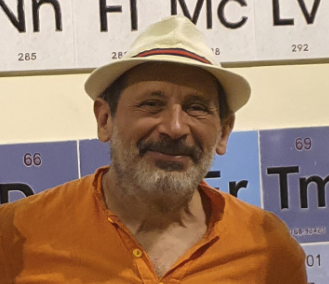
Horacio Miguel Pastawski
Instituto de Física Enrique Gaviola, Universidad Nacional de Córdoba, Academia Nacional de Ciencias, Argentina
In this tutorial talk I walk through some of the main ideas that drew my own scientific pathways, much of which I shared with my wife, Patricia Rebeca Levstein. An early puzzle I confronted was the non-Hermitian Hamiltonian used to evaluate transport. Indeed non-hermiticity, much as decoherence, resulted from the interaction with infinite degrees of freedom of the environment. An early solution was de D’Amato-Pastawski model which found its grounding support on the Keldysh-Kadanoff-Baym quantum fields formalism in the form of Generalized Landauer-Büttiker Equations (GLBE) that describe a generalized density matrix that accounts for quantum dynamics and decoherent phenomena. Our own quantum dynamics experiments of spin systems lead us to recognize different emergent phenomena, such as quantum dynamical phase transitions and intrinsic irreversibility. Moreover, through the “quantum-drift model” (a particular form of stochastic Schrödinger equation) together with a quantum parallelism algorithm, one can evaluate the density matrix, polarizations and chemical yields at much more economical computational cost than the original GLBE. We will describe how these advantages, together with the basic chemistry I learnt from Patricia, allowed us to solve one of the mysteries of quantum biology: the geomagnetic detection mechanism that allows the night navigation of some birds. Didactical Reviews: Electron-Phonon interaction and electronic decoherence in molecular conductors. H. M. Pastawski, L. E. F. Foa Torres, E. Medina; Chem. Phys. 281/2-3 pp. 257-278 (2002). Revisiting the Fermi Golden Rule: Quantum dynamical phase transition as a paradigm shift, Phys. B 398, 278 (2007). Recent results: — Decoherent time-dependent transport beyond the Landauer-Büttiker formulation: A quantum-drift alternative to quantum jumps, L.J. Fernández-Alcázar and H.M. Pastawski, Phys. Rev. A 91, 022117 (2015). — Universal stability of coherently diffusive 1D systems with respect to decoherence. F.S. Lozano-Negro, E. Alvarez Navarro, N.C. Chávez, F. Mattiotti, F. Borgonovi, H.M. Pastawski, G.L. Celardo, arXiv:2307.05656, Phys. Rev. A 109, 042213 (2024). — Quantum Dynamical Phase Transition Drives Topological Sensitivity in Avian Magnetoreception. F.S. Lozano-Negro, L. Fernández-Alcazar, E. Medina and H. M. Pastawski. Ref. to be announced.
Plenary Speakers
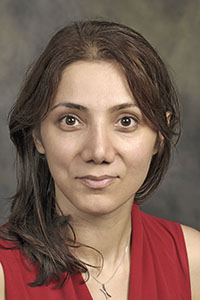
Mercedeh Khajavikhan
Electrical & Computer Engineering (ECE), University of Southern California
From Symmetry to Entropy: New Design Principles for Next-Generation Photonic Devices

Tsampikos Kottos
Department of Physics, Wesleyan University
Programming Wave Transport from Within: In-Situ Adjoint Optimization in Complex Scattering Media

Hanns-Christoph Nägerl
Institute for Experimental Physics, University of Innsbruck, Innsbruck, Austria
Cold atoms: A wonderful platform for quantum physics

Rafael Alberto Méndez Sánchez
Instituto de Ciencias Físicas, UNAM
Coupled-Resonator Phononic Molecules: A Platform for Exploring Topological Phase Transitions

Emerson Sadurní
Instituto de Física, BUAP
The WKB centennial and its influence on modern Quantum Analogies

Grethell Georgina Pérez Sánchez
UAM- Azcapotzalco
Optical Fiber Gratings and Applications
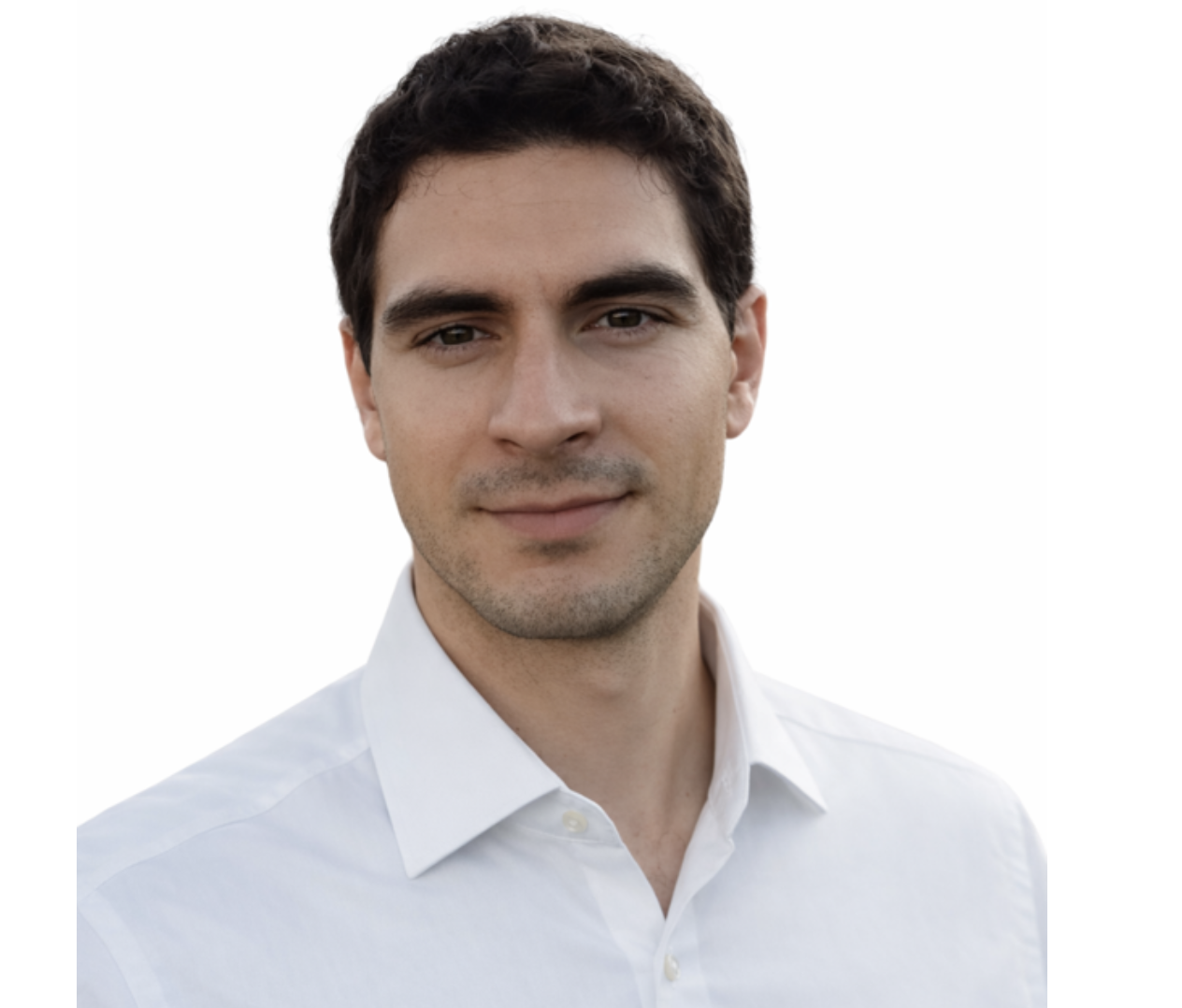
Lucas J. Fernández Alcázar
Universidad Nacional del Nordeste-CONICET
Beam Thermalization in multimoded nonlinear photonic networks and (classical) many-body localization
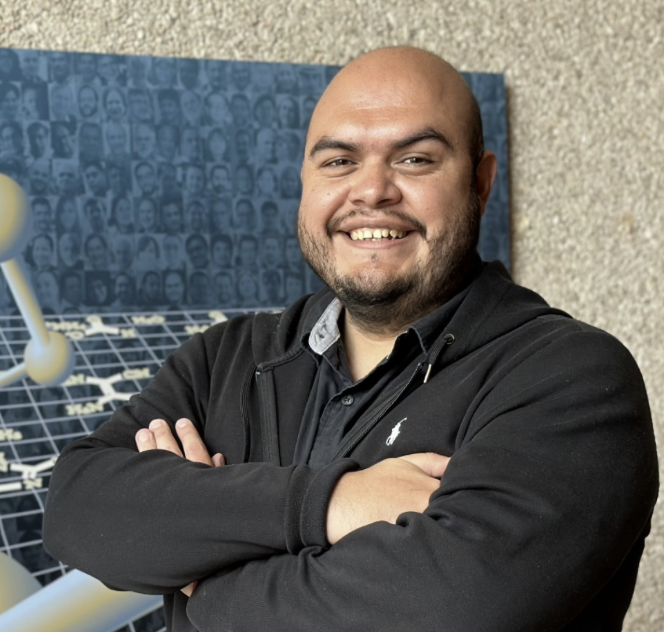
Roberto de J. León-Montiel
Instituto de Ciencias Nucleares, UNAM
Rapid photon bunching characterization via photon-number-resolved detection
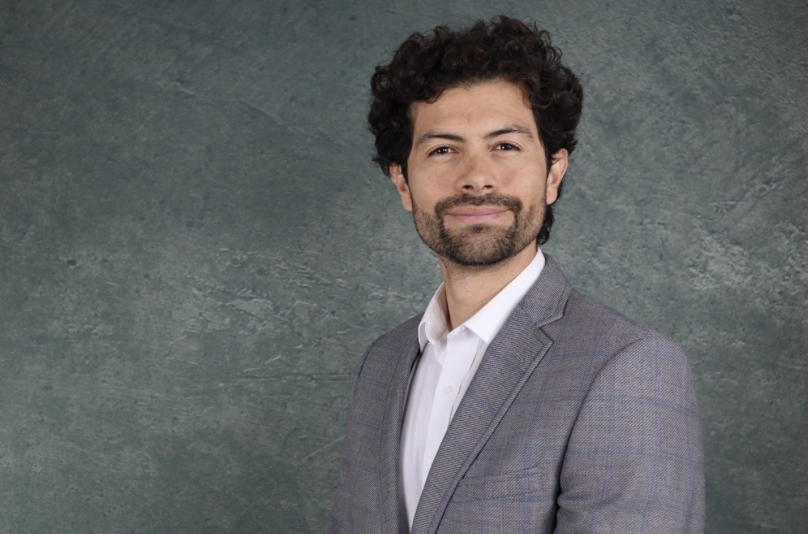
David Bermúdez Rosales
Cinvestav Unidad Zacatenco
Backreaction of stimulated Hawking radiation in an optical analogue

Alejandro Kunold Bello
Departamento de Ciencias Básicas, UAM-A
How to Train Your Transmon: Neural Networks for Quantum Gate Engineering

Angel Martinez Argüello
Instituto de Física, Benemérita Universidad Autónoma de Puebla
Onset of universality in the dynamical mixing of a pure state
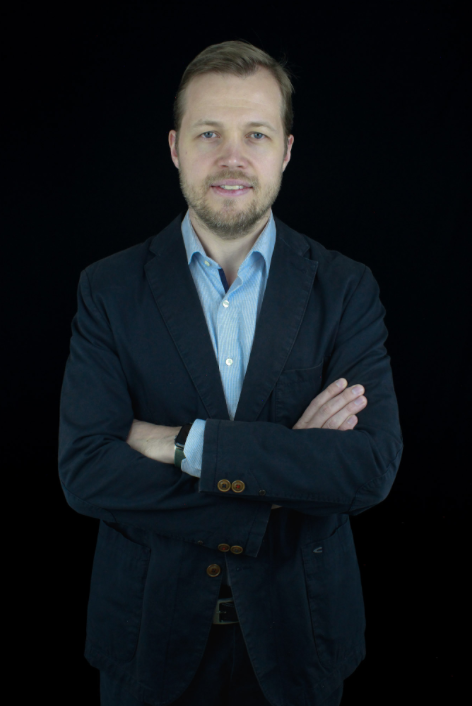
Thomas Werner Stegmann
Instituto de Ciencias Físicas, UNAM
Edge-State Transport in Graphene-Based Materials

María Gabriela Baez Juárez
Departamento de Ciencias Básicas, UAM-A
Vibration Control: Classical and Quantum Wave Analogies
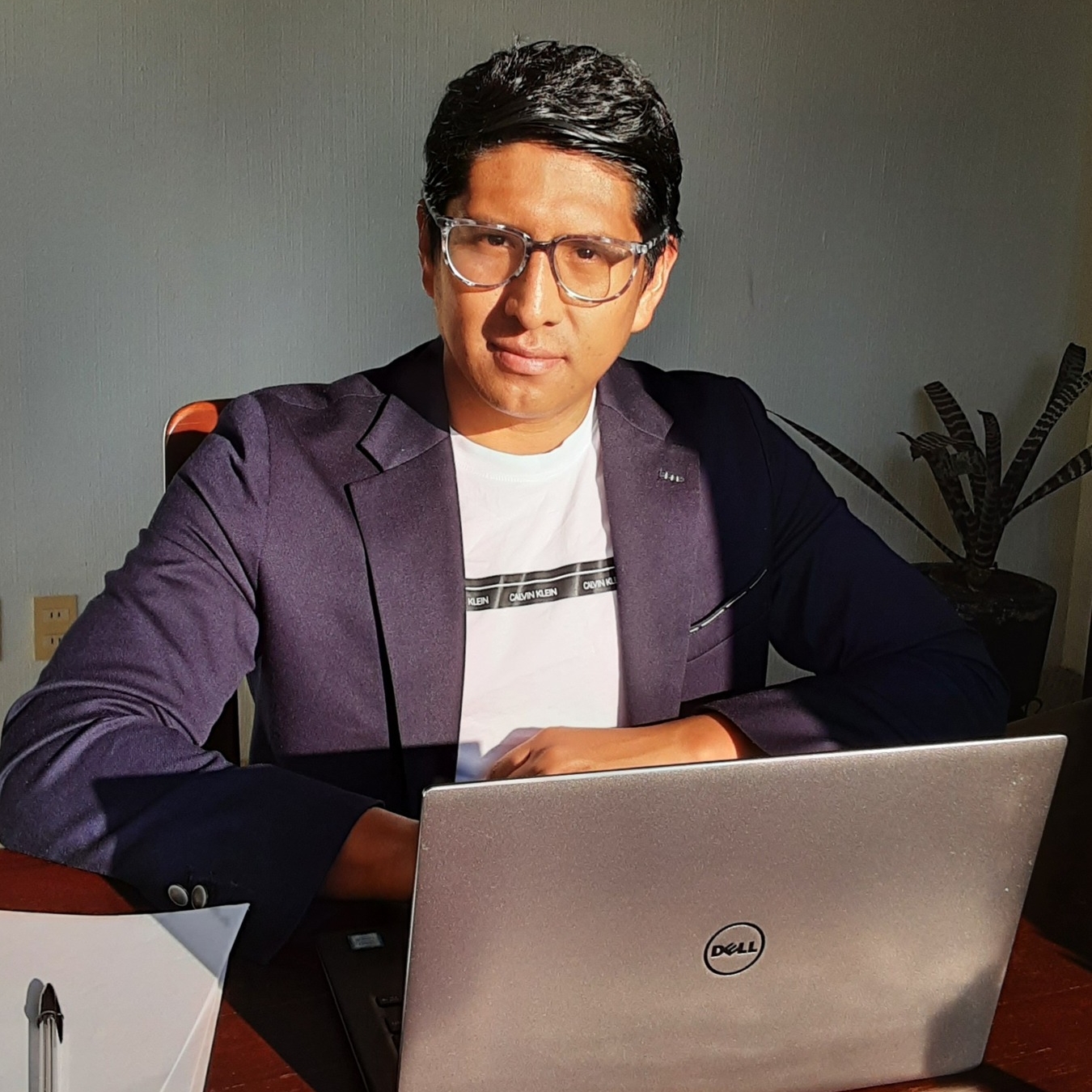
Adrián Escobar Ruiz
Universidad Autónoma Metropolitana, Iztapalapa UAM-I
Geometry at fixed energy: nodal curves and information in degenerate quantum oscillator states

Delfino Reyes Contreras
Universidad Autónoma del Estado de Mexico, Toluca, Mexico
Carbon quantum materials: the case of carbon nanodots
Giuseppe Pirruccio
Instituto de Física, UNAM
Macroscopic coherence and vorticity in a room-temperature polariton condensate confined in a self-assembled perovskite microcavity
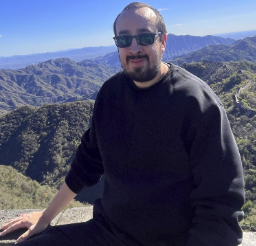
Luis Fernando Quezada Mata
Universidad Autónoma de San Luis Potosí
Quantum Games in Quantum Networks: From Secure Communications to Strategic Decision-Making

Santiago F. Caballero Benítez
Instituto de Física, UNAM
Quantum Correlations and Entanglement in Generalized Dicke-Ising Models

Pablo Barberis Blostein
Instituto de Investigaciones en Matemáticas Aplicadas y en Sistemas, UNAM
Delayed Non-Markovian Waveguide QED: Spontaneous Dark-State Generation and Quantum Memory

Ricardo Méndez Fragoso
Facultad de Ciencias, UNAM
Optical atoms as simulators of confined quantum systems

Humberto Laguna Galindo
Universidad Autónoma Metropolitana, Iztapalapa UAM-I
Correlations in quantum channels in position, momentum and phase-space in superpositions of quantum harmonic oscillators

Mauricio Torres
Instituto de Física, BUAP
Quantum Information Protocols with Perfect Revivals of Rabi Oscillations

Horacio Olivares Pilón
Universidad Autónoma Metropolitana, Unidad Iztapalapa
Periodic trajectories in molecular physics: The H3+ molecule

José Eduardo Barrios Vargas
Facultad de Química, UNAM
Defect-induced topological pumping in a non-Hermitian chain

Manan Vyas
ICF UNAM
Structure of Interacting Many-Body Quantum Spectra

José Luis Hernández Pozos
UAM-I
Paul trap to a generalized elliptical trap at the turn of one parameter

Eduardo Serrano Ensástiga
Universidad Autónoma Metropolitana-Iztapalapa
Extreme quantum spin states for metrology: characterization and engineering

Silvia Hidalgo Tobón
UAM-I
Quantum Spin Dynamics in Magnetic Fields: From Theory to Clinical Imaging

Fernando Ramírez Martínez
ICN-UNAM
Atom Interferometry and Structured Light Beams
Abstract
Biography
Sessions

José Guadalupe Santiago García
Instituto de Física, Benemérita Universidad Autónoma de Puebla
Binding thresholds for mixed clusters of attractive and repulsive impurities
In one and two dimensional lattices, a single attractive impurity binds a state for any potential strength. We show that clusters combining attractive and repulsive defects can instead require a finite strength for a state to become bound below the band. This critical strength is derived in closed form for simple mixed impurity arrays on the chain and square lattice. Numerical calculations confirm our results.
Jaime Alejandro Franco Medrano
Universidad Autónoma Metropolitana, Unidad Azcapotzalco — Departamento de Ciencias Básicas
Experimental Verification of the Double Topological Phase Transition in an Elastic Analog of Cis-Polyacetylene
We present the experimental implementation of an elastic analog of cis-polyacetylene with first- and third-neighbor interactions, described by an extension of the Su-Schrieffer-Heeger (SSH) model. This model predicts a double topological phase transition between two non-trivial phases, characterized by opposite winding numbers, in contrast to the conventional transition of the SSH model. Based on these predictions, an elastic structure consisting of coupled resonators was designed to reproduce the topological behavior of the quantum polymer. Experimental characterization revealed the emergence of localized edge states (solitons), while analysis of their properties confirmed their topologically protected nature, in agreement with the theoretical model.

Marco Antonio Zurita Martínez
Departamento de Ciencias Básicas e Ingeniería, Universidad Autónoma Metropolitana – Unidad Iztapalapa (UAM-I)
Classical Chaos and Information-Theoretic Measures in the Quantum Contopoulos Potential
We study the two-dimensional, non-separable Contopoulos Hamiltonian \[ H = \frac{1}{2}\left(p_x^2 + p_y^2\right) + \frac{1}{2}\left(x^2 + y^2\right) + a\,x^2y^2, \qquad a > 0, \] as a model for the transition from the superintegrable isotropic oscillator \(\left(a = 0\right)\) to non-integrable dynamics. Classically, we characterize the phase space through Poincaré sections and Lyapunov exponents computed with the Benettin method, building a chaos map in the \((a,E)\) plane. At fixed energy, increasing the coupling drives the system from quasi-regular motion to extended chaos, with only small stability islands surviving. On the quantum side, we construct compact variational trial functions for the three lowest levels, respecting their symmetries, and express the optimal parameters as Padé approximants in \(a\). Benchmarked against Lagrange-mesh calculations, the energies are highly accurate across the explored coupling range. With these wavefunctions we evaluate Rényi and Shannon entropies, mutual information, and Fisher information in position and momentum space. Several of these have closed-form expressions in terms of modified Bessel functions \(K_\nu(z)\). The corresponding entropic and Fisher uncertainty relations are satisfied for all \(a\) and saturated in the harmonic limit, while the mutual information quantifies the \(x\text{--}y\) correlations induced by the coupling. Finally, we compare the rate of change of these measures with the growth of the mean Lyapunov exponent along the quantum energies, exploring information-theoretic signatures of classical chaos in the eigenstates.

Ernesto Benítez Rodríguez
Universidad Autónoma Metropolitana - Iztapalapa
Study of Wigner function negativity and phase space of cubic phase states
The quest for quantum advantage has driven research into new quantum resources suited to specific quantum computing frameworks. In this work, we extend the study of so-called Cubic Phase States (CPSs), a class of quantum states whose nonlinear character has been proposed as a cue for a universal scheme for continuous-variable quantum computing. We calculate the negativity of the CPSs Wigner function as a function of the squeezing and cubicity parameters, perform a phase-space study of the CPSs to classify them using the stellar formalism, and relate their negativity to a metrological task. We conclude that CPSs Wigner negativity improves parameter-estimation precision.

Luis Gerardo González Pérez
Universidad Autónoma Metropolitana, Unidad Iztapalapa
Billiards with non-Euclidean Geometry
The standard billiards confines a particle on a flat space, for example, the Sinai or stadium billiard, and any change of the boundary affects the dynamics of the particle, propitiating the existence of regular and chaotic trajectories. This work analyzes the dynamics of billiards where the particle is trapped on a surface with non-Euclidean geometry using tools like sections of the surface and concepts from differential geometry, and thus establishes conditions for the appearance of regular and chaotic trajectories. This model can be used to develop optical devices like microcavities in photonic circuits.

Luis Miguel Bustamante Vargas
Instituto de Ciencias Físicas (ICF-UNAM)
Static and dynamic properties of spin-boson model in ultra-strong coupling (USC) regime
The spin-boson model is a useful tool for studying two-level systems (TLS) coupled to a bosonic environment. Understanding how these systems behave and the consequences of increasing the coupling strength is fundamental in fields such as quantum information and quantum computing. However, although its Hamiltonian has a simple form, very strong coupling regimes, such as the ultra-strong coupling (USC) regime, require non-perturbative methods to describe the system. In general, the dynamics are studied using density-matrix methods, which require tracing out the bath degrees of freedom, thereby losing this information. In this work, we propose to study the dynamical properties of the spin-boson model by solving the Schrödinger equation in the polaron frame.

Adán González Andrade
UAM-Iztapalapa
Quantum scarring in a soft confinement potential
A quantum scar occurs when, in a quantum system, the probability density near an unstable periodic orbit (UPO) of its classical counterpart is anomalously high, differing significantly from the statistically expected density [1]. This phenomenon has been extensively studied in hard-wall quantum billiard systems confined by sharp boundaries (infinite potential wells). The eigenstates in these systems reflect both the energy surfaces and classical closed orbits. Quantum scarring serves as a conceptual bridge between classically chaotic dynamics and quantum mechanics, recently becoming an active research topic across diverse fields, including many-body quantum systems, quantum control, electron optics, information processing, and quantum transport [2, 3, 4, 5]. A novel platform for investigating chaos is soft-wall quantum billiards, where the confining potentials lack infinite walls. Their classical counterparts model laboratory potentials more realistically [6] and provide valuable insight into the chaos-to-regularity transition [7]. While recent progress has addressed quantum scarring in soft billiards, particularly under harmonic potentials [8, 9], key questions remain open. In this work, we analyze the persistence and alteration of quantum scars as the wall softness varies across novel billiard geometries. We discuss the theoretical framework of quantization in soft billiards, employ quantitative analysis techniques including Lyapunov exponents, and provide perspectives on quantum scarring in dissipative and many-body systems.
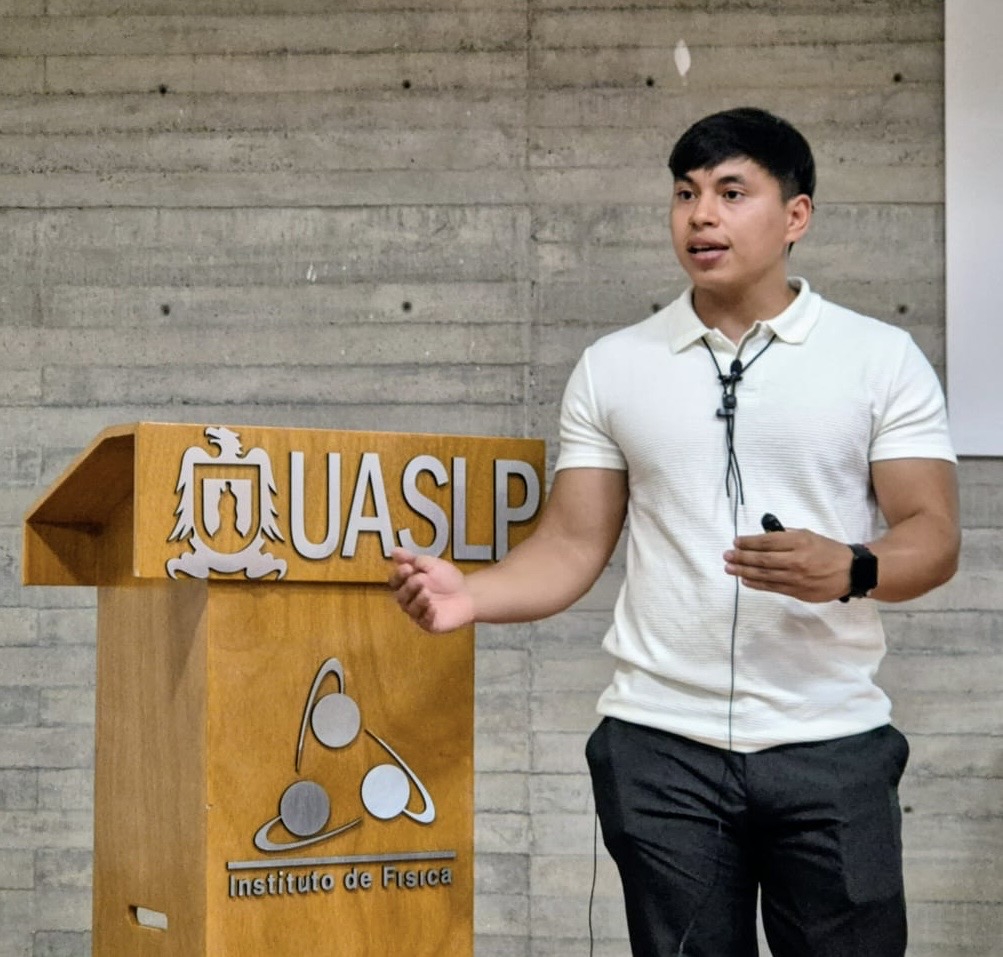
Sergio Daniel Villanueva Aragón
UASLP
Multimodal Perfect Absorption and Experimental Challenges
Microwave wave absorption work on waveguides using irregular arrangements in multiple modes.

José Eduardo Toral Zavaleta
Universidad Autónoma Metropolitana - Unidad Iztapalapa
Perfect absorption in an irregular array of scatterers: poles and zeros of the Scattering Matrix
In this work, we analyze wave scattering in a one-dimensional quantum system composed of twelve potential barriers. Three cases are considered: (i) a locally periodic array of barriers without absorption; (ii) the same locally periodic array with absorption, modeled by a complex potential with a negative imaginary part; and (iii) an absorbing barrier array in which the distances between adjacent barriers are optimized to achieve the condition of perfect absorption.
Program
View the conference program below or download the complete PDF.
Organizing Committee

Moises Martínez Mares
UAM-I

Miguel A. Bastarrachea Magnani
UAM-I

Víctor Domínguez
UAM-A

John A. Franco
UASLP

Luis Felipe Rodríguez Jorge
Colegio Nacional